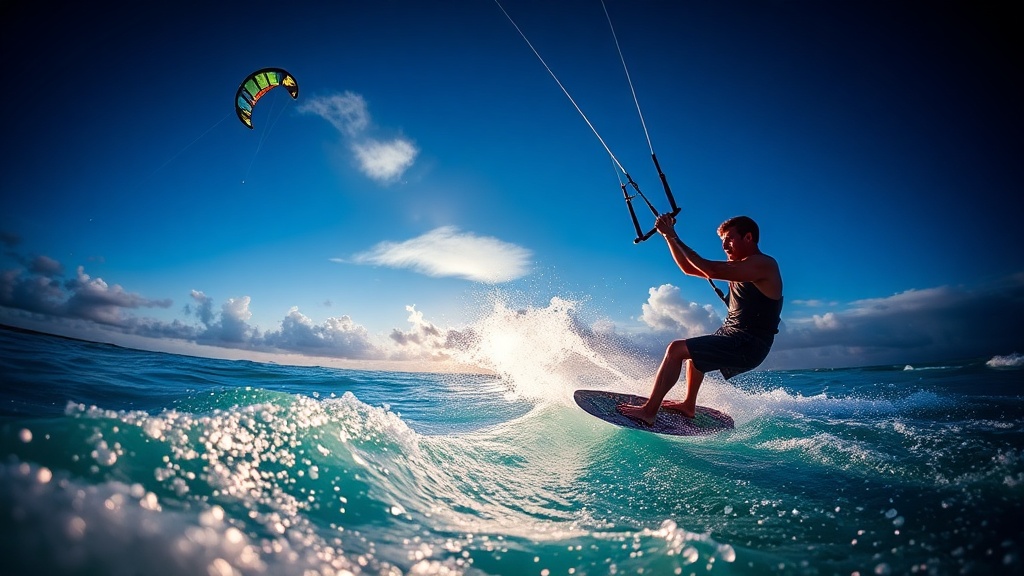
Your Mind on the Water: Strategies for Fearless Kiteboarding Progression

What does fear feel like on the water?
Globally, nearly 80% of extreme sports participants admit to experiencing significant fear or anxiety at some point in their athletic pursuits. While kiteboarding offers unparalleled freedom, it also presents situations that can trigger a primal fear response – whether it’s the unpredictable nature of the ocean, the raw power of the wind, or the inherent risks of learning new tricks. This isn't about eliminating fear entirely; rather, it’s about understanding its mechanics and developing strategies to manage it, ensuring safer and more enjoyable progression.
On the water, fear manifests in numerous ways, some subtle, others undeniable. Physically, you might notice your muscles tensing, your grip tightening excessively on the bar, or your breathing becoming shallow and quick. Your heart rate elevates, and you might feel a knot in your stomach. Mentally, fear can induce tunnel vision, narrowing your focus solely on the perceived threat – be it a looming wave, a gust line, or the ground rushing up during a jump attempt. You might find yourself overthinking simple maneuvers, leading to hesitation, or, conversely, acting impulsively without proper consideration. This internal struggle can turn a potentially fun session into a mentally exhausting ordeal, hindering skill acquisition and diminishing confidence.
It's important to distinguish between healthy caution and debilitating fear. Caution is a protective mechanism, prompting you to assess risks, check your gear, and avoid obviously dangerous situations. Debilitating fear, however, paralyzes you, preventing you from executing known skills or even attempting minor advancements. It’s when your body and mind are so consumed by the ‘what ifs’ that you can’t engage with the present moment of riding.
How do experienced riders conquer their anxieties?
Conquering anxiety isn’t about being fearless; it’s about having a toolkit to deal with those moments when fear tries to take hold. Experienced kiteboarders aren't immune to apprehension; they’ve simply cultivated habits that allow them to process and move past it. Much of this comes down to thoughtful preparation and a methodical approach to progression.
The Power of Preparation and Visualization
Before even stepping on the sand, preparation begins. This means diligently checking your equipment—lines, kite, harness, board—to remove any doubts about gear failure. Understanding the forecast, tides, and potential hazards of your chosen spot also plays a big part. Beyond the physical, mental preparation is key. Many top athletes use visualization techniques, mentally rehearsing a trick or a challenging ride repeatedly before attempting it. By playing out the successful scenario in your mind, you create neural pathways that make the actual execution feel more familiar and less daunting. This practice can significantly reduce pre-session jitters and boost confidence.
Incremental Skill Building
One of the most effective strategies is to break down complex goals into smaller, manageable steps. Instead of aiming to land a complex unhooked trick tomorrow, focus on mastering each component: the approach, the unhooking, the pop, the body rotation, and the landing, in isolation. This iterative process allows you to build confidence incrementally. Celebrate each small win—a perfect pop, a clean grab, holding an edge through chop—as these micro-achievements compile into significant psychological momentum. Never try to rush the process; sustainable progression comes from solid foundations.
Breathwork and Mindful Presence
When fear tightens its grip, your breath is often the first thing to change. Learning controlled breathing techniques can be a powerful tool for calming your nervous system. Simple practices like inhaling deeply for four counts, holding for four, and exhaling slowly for six counts can actively signal to your brain that you are safe, reducing panic. Incorporating mindfulness—focusing purely on the sensation of the wind, the board on the water, the kite in the sky—can pull your attention away from anxious thoughts and ground you in the present moment.