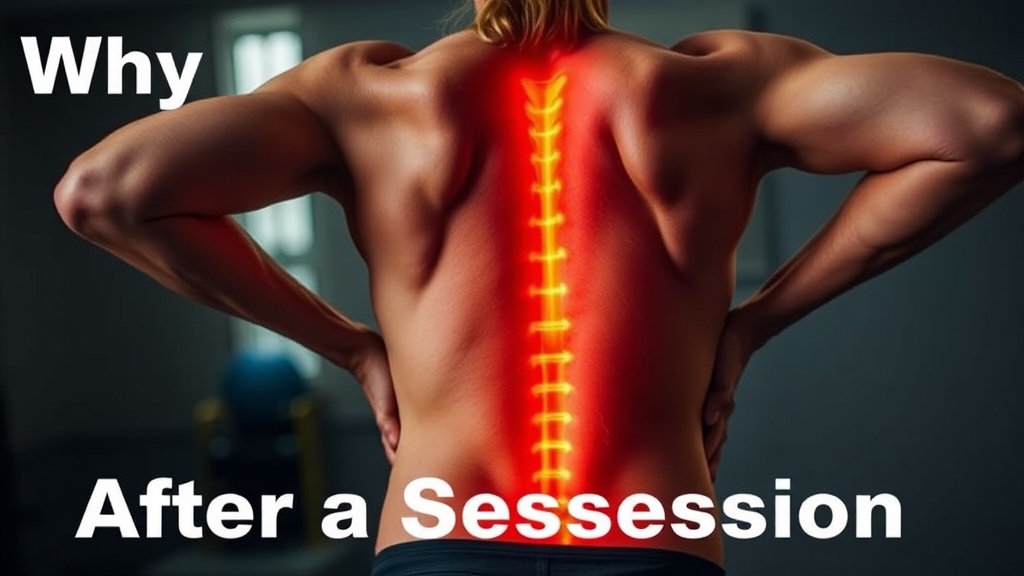
Why Your Lower Back Feels Tight After a Session

Understanding the Impact of Kiteboarding on Your Spinal Alignment
This post examines why kiteboarding often leads to lumbar discomfort and how you can address it through specific physical adjustments. You'll learn why the tension occurs in your lower back, how to identify if your technique is causing the strain, and what movements you can use to find relief. If you've noticed a nagging ache in your lower spine after a heavy session, it isn't just bad luck—it's often a byproduct of how you hold your tension against the wind.
The physical demands of kiteboarding are unique. You aren't just balancing; you're actively resisting a constant, directional pull from the kite. This resistance often translates to a constant isometric contraction in your core and lower back. When your muscles fatigue, your form breaks down. Instead of your core absorbing the energy, your lumbar spine begins to take the brunt of the load. This leads to that dull, heavy ache that follows you home from the beach.
Does kiteboarding cause lower back pain?
Yes, it can, especially if your core engagement isn't consistent during high-wind sessions. When you rely on your lower back to stabilize your position instead of your deep abdominals, you're putting unnecessary pressure on your spinal discs. This often happens during jumps or when riding hard against the wind. The sudden shifts in tension can lead to acute muscle spasms or long-term tightness if you don't address it. To keep your spine healthy, you should follow the advice found on sites like Healthline regarding spinal mechanics.
One major factor is the "hinge" effect. Many riders tend to round their lower back when they get tired. This rounding moves the center of gravity away from a neutral position, forcing the small muscles around your vertebrae to work much harder. It's a common mistake that can lead to chronic issues if you don't correct your posture. Rather than leaning back with a bent spine, you should aim for a slight hinge at the hips, keeping the lumbar area relatively stable and straight. This allows your hips and glutes to do the heavy lifting rather than your spine.
How can I prevent back strain while riding?
Prevention starts with your pre-session routine and your mid-session adjustments. You shouldn't just jump into the water and start riding; you need to wake up your stabilizers first. Focus on movements that activate the transverse abdominis and the glutes. If you feel your lower back starting to tighten while you're out on the water, it's a signal to change your stance or take a break. You might be leaning too far back or not engaging your core enough to handle the kite's pull.
Another way to prevent injury is to look at your equipment. A board that is too stiff or a use that doesn't fit properly can change how your body weight is distributed. If your use sits too high, it might be pulling on your ribs and disrupting your natural center of gravity, which forces your lower back to compensate. A well-fitting use is a fundamental part of your gear setup.
What exercises help with kiteboarding back fatigue?
Recovery isn't just about resting; it's about active-recovery-based movement. To counteract the constant forward pull of the kite, you need to work on posterior chain strength and hip mobility. Exercises like the bird-dog, deadlifts (with proper form, of course), and various planks help build the stability needed to stay upright. Also, focusing on hip flexor mobility is vital. If your hip flexors are tight, they will pull on your pelvis, which in turn creates tension in your lower back.
A quick table below outlines common movements that help mitigate the specific stresses of kiteboarding:
| Focus Area | Recommended Movement | Why It Helps |
|---|---|---|
| Core Stability | Plank Variations | Builds endurance in the deep abdominals. |
| Posterment Strength | Bird-Dog | Improves spinal stability and control. |
| Hip Mobility | Pigeon Pose | Relieves tension in the hips that affects the low back. |
| Glute Activation | Glute Bridges | Ensures the lower body supports the weight. |