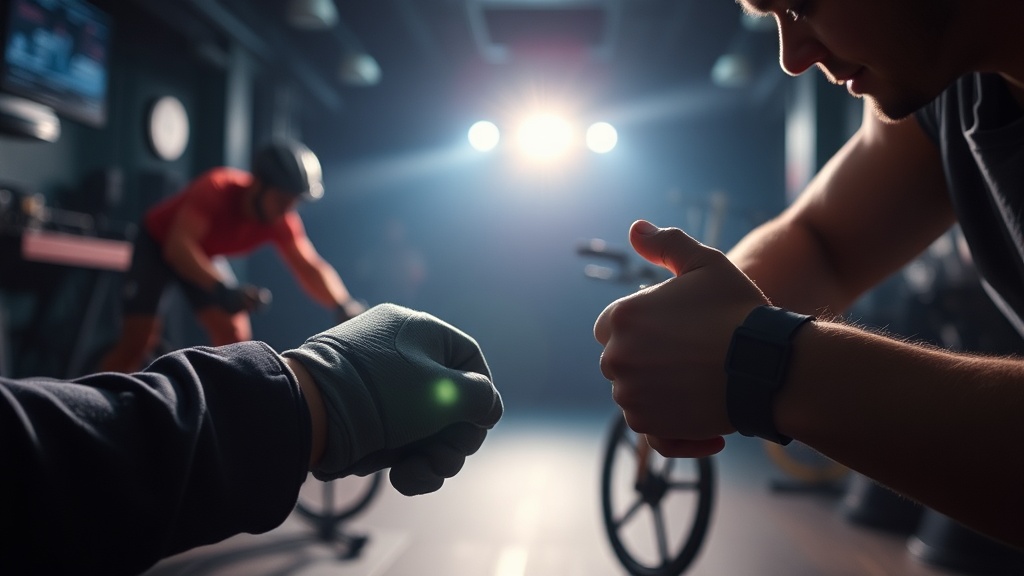
Why Your Grip Gives Out Before Your Legs Do

Most riders assume kiteboarding is a lower-body sport—and they're half right. Your quads and calves handle the load, sure, but ask anyone who's packed up early on a perfect day: forearm pump and grip fatigue are the real session killers. The bar becomes a battle you can't win, your kite control gets sloppy, and suddenly you're nursing sore hands while better riders stay out. This guide covers why grip endurance matters more than raw strength, and what you can do about it before your next session.
Why Does Grip Fatigue Matter So Much in Kiteboarding?
Your hands are the only connection between your brain and the kite. When your forearms start burning, your ability to sheet in precisely, dump power instantly, or hold a consistent edge deteriorates fast. It's not just about comfort—grip failure is a safety issue. A bar you can't control means a kite that reacts unpredictably in gusts.
The mechanics are straightforward but brutal. Kiteboarding requires sustained isometric contraction in your forearm flexors while your fingers maintain a closed grip around a relatively thin bar. Add the vibration from chop, the sudden pulls from gusts, and the prolonged duration of sessions (often 2-3 hours), and you've got a recipe for localized muscular endurance failure that no amount of leg strength can compensate for.
Here's the kicker: most riders train everything except grip-specific endurance. They squat, they deadlift, they do balance work—and they still come in early because their hands are shot. The disconnect comes from treating grip as an afterthought rather than a primary physical capacity for the sport.
What's the Difference Between Grip Strength and Grip Endurance?
Strength is your ability to produce maximum force once. Endurance is your ability to maintain submaximal force repeatedly over time. In kiteboarding, you almost never need maximum grip force—you need to hold moderate tension for extended periods while making subtle adjustments. That makes endurance the priority.
Think of it this way: a climber with crushing grip strength might fail on a long sport route because their forearms pump out. Same principle applies on the water. You don't need to crush a soda can; you need to hold onto a bar for two hours without your hands turning into claws.
The physiological adaptation you're after is improved capillary density and mitochondrial function in the forearm muscles, better tolerance to metabolic byproducts (that burning feeling), and improved motor unit recruitment patterns that delay fatigue. That takes specific training—not just hoping your regular gym work covers it.
How Should You Train Grip for Longer Sessions?
Effective grip training for kiteboarding follows three principles: specificity, volume accumulation, and recovery management. Skip the heavy grippers designed for closing strength. Instead, focus on timed holds, repetitive open-close cycles, and fat-grip variations of exercises you're already doing.
Farmer's Carries with Fat Grips: Load up 70-80% of your body weight across two dumbbells or kettlebells. Wrap the handles with towels or use fat grip attachments to increase diameter—this forces your fingers and forearms to work harder. Walk for 40-60 seconds, rest 90 seconds, repeat 4-6 rounds. The time under tension mimics session duration.
Plate Pinches: Grab two weight plates smooth-side-out (start with 5-10 lbs each) and pinch them together between your fingers and thumb. Hold for 30-45 seconds per hand. This builds the finger extensor and thumb strength that helps maintain bar control during sheeting movements.
Dead Hangs with a Twist: Hang from a pull-up bar for as long as possible, but add movement—swing slightly, shift weight between hands, or hang by your fingertips for brief periods. The instability forces constant micro-adjustments, similar to what your hands do on the bar in choppy water.
Wrist Roller Work: A wrist roller (or a broomstick with a rope and weight attached) trained both flexion and extension. Roll the weight up and down slowly, controlling the eccentric. Do 3-4 sets to near-failure. This builds the forearm endurance that prevents the "claw hand" you get after long sessions.
Train grip 2-3 times per week, either at the end of your regular sessions or on dedicated accessory days. Don't train grip the day before a big session—forearms need 48 hours to recover from focused work.
The Forgotten Element: Finger Extensors
Here's what most people miss—your grip isn't just about closing your hand. The muscles that open your fingers (the extensors) work antagonistically to your flexors. When extensors are weak or inhibited, flexors can't fully relax between contractions, accelerating fatigue.
Rubber band extensions are the fix. Loop a thick rubber band around your fingertips and spread your fingers against resistance. Do 3 sets of 15-20 reps per hand, or hold the extended position for 30 seconds. This small addition makes a disproportionate difference in how long your hands last on the water.
What About On-the-Water Strategies?
Training helps, but technique and equipment choices matter too. The goal is reducing unnecessary grip demand while maintaining control.
Bar diameter matters more than you'd think. Stock kite bars vary significantly—some are thin, some have ergonomic bulges. If you have smaller hands, a thinner bar reduces the finger flexion angle and delays pump. If you've got larger hands, a thicker bar lets you grip more naturally without over-curling your fingers. Experiment with different bars if you can borrow them, or consider grip tape modifications.
Hooked-in riding isn't cheating. There's a weird stigma in some circles about staying hooked in, like it somehow makes you less skilled. Nonsense. The harness takes load off your arms and hands—use it. Unhook for tricks, sure, but for cruising, transitions, and basic jumps, staying hooked preserves grip endurance for when you actually need it.
Sheet actively, grip passively. Many riders white-knuckle the bar constantly. Better technique is maintaining a firm but not crushing grip, and using your sheet hand actively to adjust trim while your back hand steers. Distribute the workload. Also, consciously relax your grip during downwind legs or when the kite is parked—micro-rests add up over a session.
Rest days are grip days too. If you're planning a multi-day kite trip, your hands accumulate stress faster than your legs. Schedule lighter wind days (less bar pressure) between heavy wind sessions. And no, "light wind" doesn't mean boring—it's perfect for working on transitions, surface passes, or strapless tricks that don't load the bar as heavily.
When Should You See a Specialist?
Persistent forearm pain, tingling in the fingers, or hand weakness that doesn't improve with rest isn't normal training fatigue. These can indicate nerve compression (carpal tunnel or ulnar nerve issues), tendonopathy, or compartment syndrome. Kiteboarding with compromised grip isn't just limiting—it's dangerous.
A sports physiotherapist can assess whether your issue is muscular (trainable), neural (requires different intervention), or mechanical (equipment or technique related). Don't tough it out for weeks hoping it resolves. The earlier you address grip issues, the faster you're back on the water with full control.
"Your hands are your interface with the kite. Everything else—your edge, your pop, your landing—depends on maintaining that connection. Neglect grip endurance and you're building a house on sand."
Research on climbing-related grip fatigue published in the Journal of Strength and Conditioning Research supports the approach of prioritizing submaximal endurance over maximal strength for sports requiring sustained grip. The principles translate directly to kiteboarding's demands.
For a comprehensive breakdown of forearm anatomy and sport-specific training considerations, the National Strength and Conditioning Association provides evidence-based resources on grip development that go beyond the typical "just do more deadlifts" advice.
Equipment-wise, understanding bar ergonomics can guide your purchasing decisions. Industry reviews and comparisons at The Kite Mag regularly cover bar design changes and their implications for comfort and control over long sessions.
Start with one or two grip exercises added to your existing routine. Give it four weeks of consistent training. The next time the wind stays steady and everyone else is shaking out their hands on the beach, you'll still be out there—bar pressure steady, control precise, session extended.