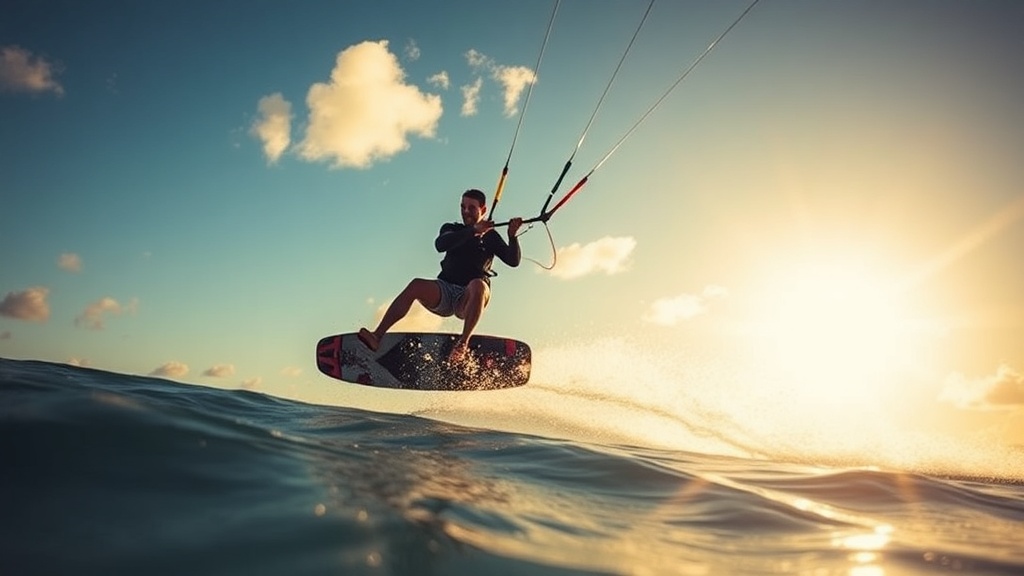
5 key Kiteboarding Training Exercises to Dominate the Water

Plank Variations for Core Stability
Single-Leg Balance Drills
Resistance Band Pull Exercises
Plyometric Box Jumps
Swim Training for Endurance
Kiteboarding demands a unique blend of strength, balance, and endurance that gym workouts alone won't build. This post breaks down five targeted training exercises that translate directly to better performance on the water—whether you're struggling to stay upwind, fighting fatigue after twenty minutes, or ready to learn your first handle-pass. Each movement targets the specific muscle groups and movement patterns kiteboarding actually requires. No fluff. Just results.
What Are the Best Core Exercises for Kiteboarding?
The best core exercises for kiteboarding are rotational movements that mimic the twisting motion of riding. A strong core isn't about having visible abs—it's about controlling the kite's pull while maintaining board edge and body position through chop and waves.
Here's the thing: standard crunches won't cut it. Kiteboarding forces the core to resist rotation (anti-rotation) while simultaneously generating power through rotation. That dual demand requires specific training.
The Pallof Press stands out as the single most effective core exercise for kiters. Attach a resistance band to a fixed point at chest height, stand perpendicular to it with the band at your sternum, and press your hands straight forward. The band tries to rotate your torso—you resist. Hold for two seconds at full extension. Do three sets of twelve reps per side. This builds the exact anti-rotational strength needed to hold an edge against the kite's pull.
Russian Twists with a Medicine Ball add the rotational power component. Sit on the floor, lean back to a 45-degree angle, lift your feet slightly, and rotate the ball from hip to hip. The key? Control the movement—don't let momentum do the work. Three sets of twenty rotations hits the obliques and transverse abdominis hard.
That said, don't neglect the Dead Bug. Lie on your back, arms extended toward the ceiling, knees bent at 90 degrees. Slowly lower opposite arm and leg while keeping your lower back pressed to the floor. It looks simple. It's not. This exercise builds the deep core stability that prevents the lower back pain many kiters develop from hours of use compression.
"The riders who last all day in Cape Hatteras aren't the ones with the biggest arms—they're the ones with cores that don't quit." — Local instructor wisdom from REAL Watersports
Do You Need Strong Legs for Kiteboarding?
Yes—strong legs are non-negotiable for kiteboarding. The quadriceps, hamstrings, and calves absorb constant impact from chop, maintain the semi-squat riding position, and generate the explosive power needed for jumps. Weak legs mean soreness after thirty minutes and sketchy landings that can end sessions early.
Traditional leg training focuses on straight-up-and-down movements. Kiteboarding demands something different: lateral stability, single-leg control, and the ability to absorb force then immediately reload.
Single-Leg Romanian Deadlifts (RDLs) top the list. Hold a kettlebell (start with 16kg) in one hand, stand on the opposite leg, and hinge at the hips while lowering the weight toward the floor. Keep your back flat and hips level—no rotating open. This builds the posterior chain (hamstrings and glutes) while forcing the small stabilizer muscles in your ankles and hips to fire constantly. Three sets of eight reps per leg. The carryover to board control is immediate.
The catch? Most kiters skip lateral movement entirely. Enter Lateral Lunges. Step directly sideways, keeping the straight leg extended and sinking your hips back on the bent leg. Push through the heel to return to start. This mimics the edging motion used to ride upwind and generates the groin/adductor strength that prevents the dreaded "pulled groin" crash landing. Two sets of ten per direction is plenty—if you're doing them right, you'll feel it.
For pure power, add Box Jumps. Not crazy CrossFit height—just a 16-20 inch box. Focus on soft, quiet landings with your knees tracking over your toes. This trains the stretch-shortening cycle: absorbing impact and immediately rebounding. That's exactly what happens when you land a jump and edge back upwind without losing speed. Three sets of five reps, full recovery between sets.
How Can You Build Kiteboarding Endurance on Land?
Build kiteboarding endurance through high-intensity interval training (HIIT) that mimics the sport's stop-and-go nature—short bursts of intense effort followed by brief recovery periods. Long, slow cardio won't prepare you for a two-hour session in gusty conditions.
Kiteboarding sessions involve periods of moderate cruising punctuated by explosive jumps, quick sprints to catch waves, and long beats upwind against strong wind. Your energy systems need to handle all three.
Rowing Intervals deliver unmatched carryover. The rowing machine (Concept2 is the gold standard) engages the legs, core, and back in a pulling motion that mirrors kite control. Try this protocol: 30 seconds all-out effort, 30 seconds easy paddle, repeated for ten minutes. The leg burn and improved heart rate feel remarkably similar to holding a strong edge in 25-knot wind.
Worth noting: swimming is underrated for kite endurance. Specifically, freestyle intervals with a focus on breath control. Kiteboarding often puts you in positions where you can't breathe freely (water starting, crashing, holding your breath before a jump). Swimming builds comfort with oxygen debt while strengthening the lats and shoulders that control the bar. Twenty minutes of 50-meter sprints with twenty-second rests builds real stamina.
For something more sport-specific, try Battle Rope Waves. The alternating wave pattern forces core stabilization while the arms work independently—exactly like sheeting the bar while steering. Do three rounds of 20 seconds on, 40 seconds off. Your grip will fail before your cardio does. That's good. Grip endurance matters when you're trying to hold onto the bar through a gust.
| Exercise | Primary Benefit | Equipment Needed | Session Frequency |
|---|---|---|---|
| Pallof Press | Anti-rotational core strength | Resistance band or cable machine | 3x per week |
| Single-Leg RDL | Posterior chain & balance | Kettlebell or dumbbell | 2x per week |
| Lateral Lunge | Edging power & groin strength | Bodyweight or light dumbbells | 2x per week |
| Box Jump | Explosive landing mechanics | Plyo box or sturdy bench | 2x per week |
| Rowing Intervals | Full-body cardio endurance | Concept2 rower or similar | 2-3x per week |
What About Shoulder and Back Strength?
Shoulder and back strength prevents the chronic injuries that sideline experienced kiters—specifically rotator cuff tears and lower back strain from repeated water starts and crashes. The pulling muscles (lats, rhomboids, rear deltoids) take a beating every session.
The bar doesn't pull symmetrically. Gusts yank one arm. Waves push the board off edge, forcing reactive upper body adjustments. Your shoulders and back absorb all of it.
Pull-Ups remain the gold standard—not the kipping kind, strict ones. Full range of motion: dead hang at bottom, chin over bar at top. The lat engagement directly transfers to sheeting the bar in and controlling powered moves. Can't do ten strict pull-ups? That's your first goal. Use resistance bands for assistance if needed, but build toward bodyweight.
Face Pulls with a rope attachment on a cable machine save shoulders. Set the pulley at face height, pull the rope toward your forehead while externally rotating your shoulders (ending with thumbs pointing behind you). High reps here—three sets of fifteen. This targets the rear deltoids and external rotators that stabilize the shoulder during kite loops and megaloop attempts.
For the lower back—because uses don't prevent all the strain—add Bird Dogs. On hands and knees, extend opposite arm and leg while keeping your spine neutral. Hold for five seconds. The cross-body stability challenge mirrors the kiteboarding stance: one arm pulling, opposite leg driving the board. Three sets of eight per side, slow and controlled.
Here's a Vancouver-specific note: the water's cold. Even in a 5/4mm wetsuit (the Patagonia R4 is a local favorite), muscle temperature drops faster. Warm shoulders and a fired-up back prevent the "frozen chicken wing" arm position that leads to crashes.
Can Balance Training Actually Improve Your Riding?
Yes—balance training directly improves board control, especially in choppy conditions and during landing recovery. Better proprioception (your body's awareness of position in space) means faster adjustments and fewer crashes.
The Indo Board (original balance trainer used by surfers and kiters since the 90s) remains the best tool. Start with basic stands—feet shoulder-width, knees slightly bent, finding the balance point. Once stable, add bar mimicry: hold a broomstick or actual control bar and practice sheeting motions while balancing. This forces your core and legs to stabilize while your upper body moves independently—exactly what happens on the water.
Single-Leg Balance Reaches add dynamic challenge. Stand on one leg, reach the opposite hand toward the floor in front, to the side, and behind you (forming a "Y" pattern). Your standing leg works overtime to prevent collapse. This builds the ankle and hip stability that separates kiters who can ride in 30-knot nuking wind from those who get bucked off in chop.
Worth noting: slackline walking isn't just for hippies. A Gibbon slackline set up between two trees (kits available at MEC) builds the reactive balance that translates to board recovery. When you land a jump slightly off-axis and need to save it, that's reactive balance. Start with walking. Progress to 180-degree turns. Eventually try standing on one leg.
That said, don't overthink it. Ten minutes of balance work at the end of a strength session is enough. The goal isn't to become a circus performer—it's to make your water time more controlled and less crash-heavy.
Putting this together doesn't require a gym membership. A resistance band, a kettlebell, and a patch of floor gets you 80% of the way there. The riders progressing fastest—from struggling with water starts to throwing back rolls—aren't always the most talented. They're the ones putting in the dry-land work when the wind's blown out.
Start with two sessions per week. Focus on quality movement over weight. And when you get back on the water, that first upwind beat will feel different. Easier. More controlled. That's the training paying off.